- Article

- Managing Risk
- Protecting the business
Business account fitness series: Tip #9 – Complete counterparty checks before making payments
Fraud targeting businesses has grown more sophisticated. Fraudsters may research their targets, mimic trusted contacts, and construct offers that are deliberately hard to question in the moment. The details can look convincing, the opportunity can seem genuine, and pressure to act quickly is often part of the tactic.
Any business can be targeted. A clear verification process can help reduce the risk of costly mistakes by prompting teams to pause, review and validate suspicious payment requests before acting. Here is what that looks like in practice.
Verify first, pay second
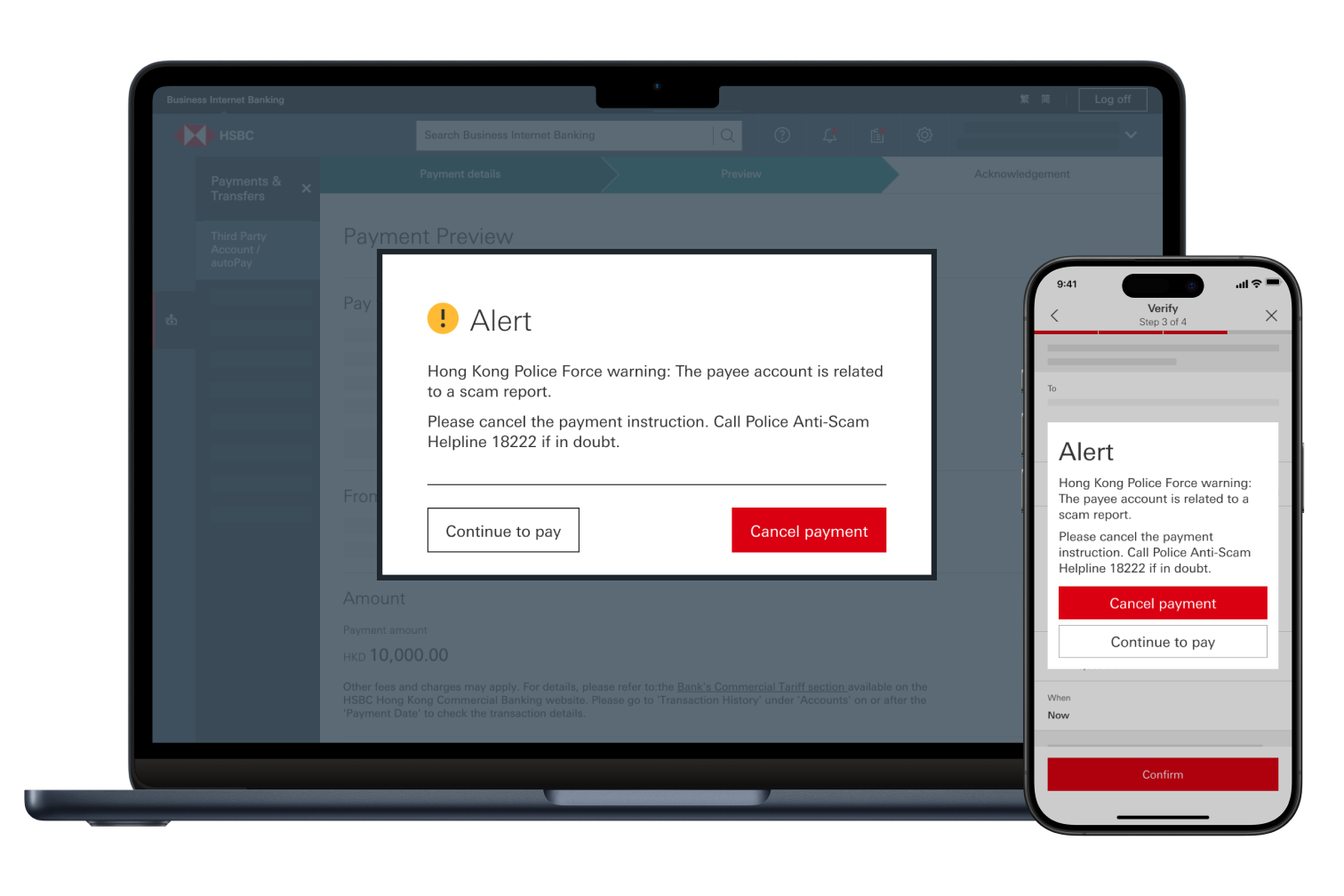
Before making any payment, take the time to confirm who you are paying and why. Warning signs include offers of unusually high returns, exceptional exchange rates, pressure to commit quickly, and instructions to pay into an unfamiliar account. Any of these should prompt you to pause before proceeding.
Verify counterparties through reliable channels such as official company records, trusted contacts, or any alerts from your bank, and keep a clear record of the checks you carry out.
Real-world examples:
Scenario 1: An investment proposal that didn't add up
Iris, a business owner, received an investment proposal promising unusually high returns with pressure to commit quickly. What followed was a carefully staged process designed to build trust before any money was requested.
Step 1 – Building trust: An individual who Iris got to know via social media offered to review Iris’s securities portfolio at no cost, while sharing detailed stock analysis to appear knowledgeable and professional. Iris later learned that her account information may have been obtained without her knowledge.
Step 2 – Creating social proof: Inside the investment group she had been introduced to, other members posted screenshots of daily “profits” and discussed investing large sums, creating the impression that significant returns were routine and achievable.
Step 3 – False reassurance: Once confidence was established, the group claimed to offer guarantees, including a promise to refund any losses, to reduce hesitation and encourage a larger commitment.
Step 4 – Manufactured urgency: The "expert" then claimed access to a limited internal purchase quota linked to a special project. Other members rushed to secure their share, applying pressure to act quickly before the opportunity closed.
Iris paused, ran independent checks through trusted channels, and confirmed the proposal was fraudulent. No funds were transferred.
In summary: Treat promises of unusually high returns, tight deadlines, or reluctance to share documentation as red flags. Verify any investment opportunity through trusted channels and internal approval processes before transferring any funds.
Scenario 2: A payment redirection scam
Ivan, who manages supplier payments for his company, was offered an exceptional exchange rate for a large CNY transfer. He was also instructed to send funds to an unfamiliar third-party account said to be linked to an existing supplier. Before proceeding, he verified the payment instructions directly with his known contact at the supplier. Both the exchange rate offer and the account details were confirmed as fraudulent.
In summary: Proactively confirm bank account details and payment instructions directly with a known contact at your business partner, using contact details you already hold. Avoid updating beneficiary details based solely on unsolicited emails or messages, and keep records of all verification checks carried out.
Why this matters
Fraudulent payment requests often succeed, not because businesses are careless, but because the requests are designed to look routine. In Hong Kong alone, businesses reported HK$92 billion in financial losses from digital fraud over the 12 months prior to a fraud trends survey conducted in mid-20251. Establishing a consistent habit of counterparty verification reduces the reliance on gut instinct alone and gives your business a strong line of defence.
It also creates a paper trail that can support your business if a dispute arises or a suspicious transaction needs to be investigated. Verification is not a sign of distrust towards your partners. It is a standard of professionalism that protects everyone involved.
How to: Stay Safe and Protected
Stay alert to red flags such as unusually high returns, exceptional exchange rates, or requests to pay new or unfamiliar payees. Fraudsters may attempt last-minute changes to beneficiary details, or requests to pay a third party, while avoiding calls and independent verification. Before proceeding, validate the counterparty and payment instructions using trusted and independent channels.
Key point: Complete counterparty checks before making payments
Tip #9 account fitness checklist
|
|
|
|
 Do:
Do: Don’t:
By building counterparty checks into your payment processes, you add a layer of protection that can help prevent significant financial and reputational damage.
As your trusted banking partner, we're here to support you on your business fitness journey and work towards achieving your ambitions. To explore more account fitness tips and learn how to establish best business account practices, visit https://www.business.hsbc.com.hk/en-gb/campaigns/account-fitness.
Download the business account fitness guide
Download the complete “Business account fitness guide” now for more real-world business scenarios to help you understand how to establish proper business account practices for smooth operations.